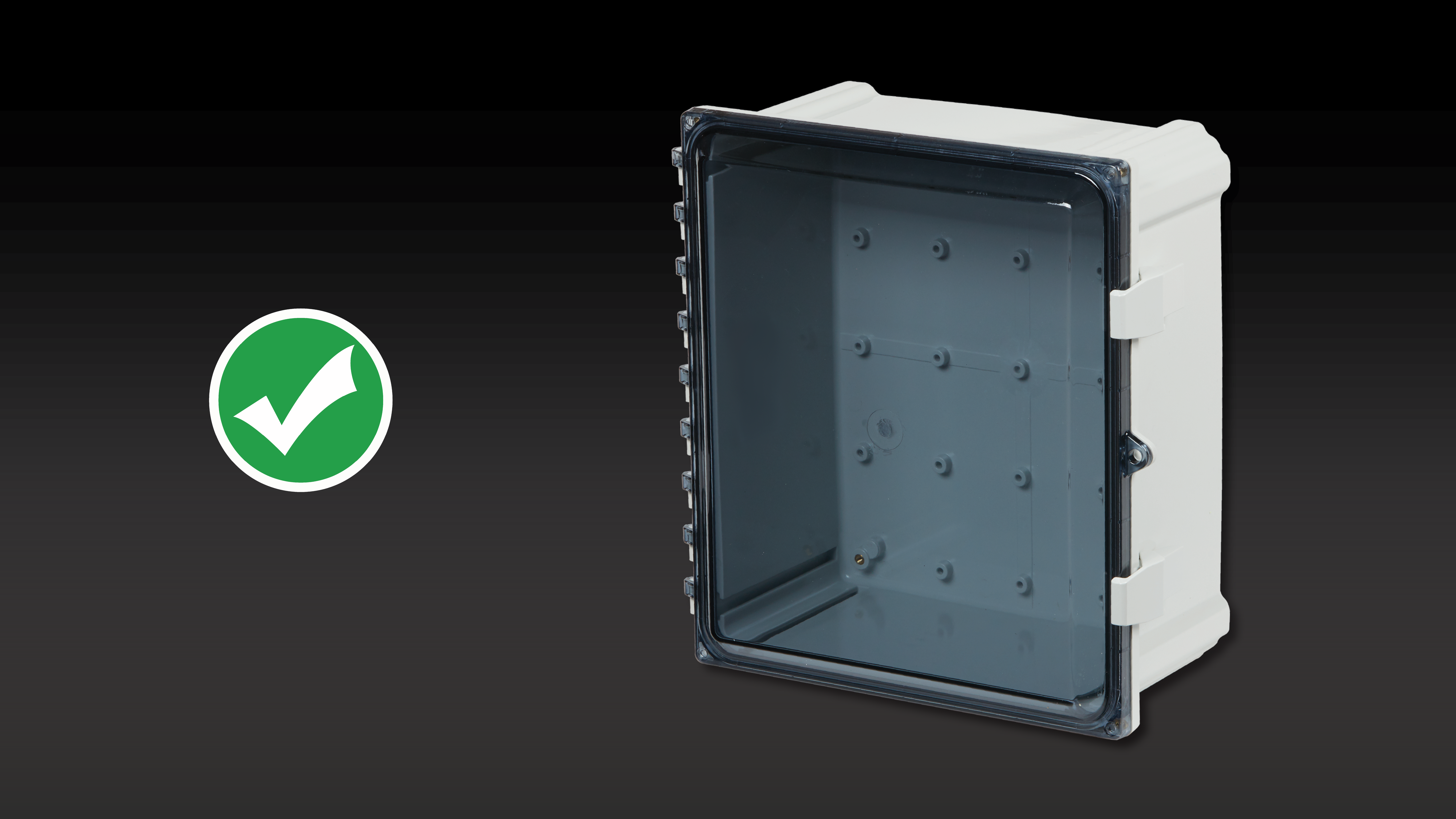
When it comes to finding the right enclosure for an electrical, instrumentation, control, or industrial application, there are lots of choices. It can feel daunting to sort through the different material types, designs, and ratings while also factoring in labor and costs for your specific project.
But never fear! Asking and answering the following key questions can help you make the best enclosure selection for your installation needs.
Key Questions to Ask When Selecting an Electrical Enclosure
The requirements of your application are the first priority to take into consideration during the enclosure selection process. These include:
- Corrosion resistance
- Chemical resistance
- Impact resistance
- Electrical conductivity issues
- Thermal/humidity and temperature issues
- UV resistance
- Contamination risks (water, moisture, dust, debris)
- Security issues (vandalism, theft)
- Electromagnetic interference issues
- Aesthetic needs/style of enclosure
It is important to consider the area of use and environmental requirements of your application to determine which enclosure will work best for you. It is key to understand the following potential environmental conditions impacting your application:
- Physical location of the application (interior/exterior, hazardous (Classified) area, etc.)
- Ingress protection requirements (water, dust, falling dirt, etc.)
- Amount of UV exposure
- Space constraints/size requirements (limited space available, larger equipment housing needs, etc.)
- Ease of accessibility issues
- Mounting requirements
- Access power and venting needs
- Thermal management considerations
Some applications have specific performance standards that enclosures must meet, such as UL (Underwriters Laboratories) and NEMA (National Electrical Manufacturers Association). Electrical enclosures are categorized by NEMA based on their ability to protect against the harmful effect of liquids and corrosive chemicals. Understanding these ratings is crucial in determining the level of protection required by your environment and the protection offered by each enclosure. These ratings are standardized nationwide, making it easy to identify hazardous and non-hazardous environments.
Based on the environmental protection that you identify, the appropriate enclosure material for your application can then be selected. For example, stainless steel, carbon steel, and fiberglass enclosures are all popular choices, but polycarbonate material offers excellent protection for equipment installed in harsh environments where certified resistance to liquid/debris ingress, corrosion/chemical contamination, damage from solid foreign objects, and UV is required.
Each enclosure type features differing weights and sizes. It's important to keep in mind that the lighter the enclosure, the faster the installation speed, which in turn reduces labor, time, and overall costs. Additionally, the ability to modify the enclosure design to suit your specific needs can provide these same benefits while adding increased value to the product's performance. Some types of customization which improve installation, handling, and value include:
- Holes, cutouts, windows, slots, vents
- Silkscreening, decals, digital printing
- Specialized finishes or coatings (EMI/RFI)
When in doubt, or in need of additional information, turn to professional experts with proven leadership in solving application challenges.
To get in touch with a member of our engineering or customer service teams visit, https://attabox.com/contact/contact-us.
Related articles concerning material types, proper product selection, and modification can be found on our blog: https://attabox.com/resources/attabox-blog.